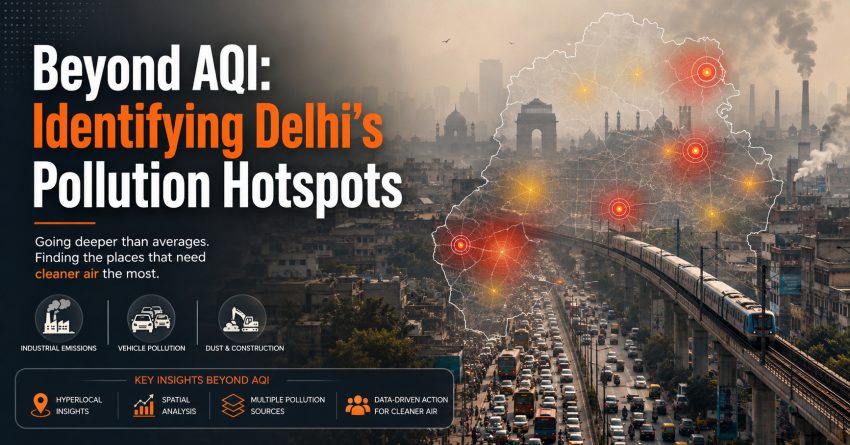
Delhi’s air pollution problem is often discussed using city-wide Air Quality Index (AQI) readings.
However, pollution exposure is not the same across the city.
While some areas experience relatively lower pollution levels, others consistently record significantly higher concentrations of harmful pollutants due to traffic congestion, industrial activity, construction dust, and waste burning.
Understanding these pollution hotspots is important because environmental risk is determined not only by air quality levels but also by how frequently people are exposed to them.
Where people live, work, travel, and spend time can have a major impact on their overall pollution exposure.
Why Pollution Exposure Matters
Most discussions focus on daily AQI values, but AQI only provides a broad picture of air quality across a city.
Actual exposure depends on:
- proximity to pollution sources
- duration of exposure
- traffic density
- industrial emissions
- local environmental conditions
This means two people living in the same city may experience very different pollution risks depending on their location and daily routine.
The question is no longer: “What is Delhi’s AQI today?” It is increasingly becoming: “Where is pollution exposure highest, and who is most affected?”
Major Pollution Hotspots in Delhi
Several locations repeatedly emerge as high-exposure zones due to the concentration of pollution-generating activities.
Anand Vihar
Anand Vihar is frequently identified as one of Delhi’s most polluted areas. Key contributing factors include:
- interstate bus terminal operations
- heavy vehicular traffic
- congestion throughout the day
- commercial transportation movement
The combination of these sources creates sustained exposure to particulate pollution for commuters and nearby residents.
Jahangirpuri
Jahangirpuri has consistently reported elevated pollution levels. The area faces challenges linked to:
- dense urban development
- nearby industrial activities
- traffic emissions
- localized waste management issues
These factors contribute to poor air quality and increased health risks for local communities.
Bawana Industrial Area
As one of Delhi’s major industrial zones, Bawana experiences significant environmental pressure. Common pollution sources include:
- manufacturing activities
- industrial fuel consumption
- freight transportation
- operational emissions
Industrial clusters often create localized pollution concentrations that differ substantially from city averages.
Wazirpur Industrial Belt
Wazirpur remains another important pollution hotspot. Environmental concerns are associated with:
- industrial processing operations
- commercial transportation
- metal and manufacturing activities
- road dust generation
Workers and surrounding residential populations may experience prolonged exposure in these environments.
High-Traffic Corridors
Areas such as ITO and other major traffic intersections regularly experience pollution spikes. Contributing factors include:
- vehicle congestion
- idling engines
- high commuter volume
- limited traffic flow
People who spend extended periods in these locations often face higher exposure levels than AQI averages suggest.
Why Hotspots Need More Attention
Environmental planning often relies on city-wide indicators. However, hotspot identification provides a more accurate understanding of environmental risk. Without hotspot analysis, it becomes difficult to:
- identify vulnerable communities
- prioritize interventions
- evaluate pollution sources
- improve public health outcomes
A city-wide average may hide the fact that certain neighbourhoods are carrying a disproportionate share of pollution exposure.
The Need for Smarter Urban Environmental Management
Delhi’s pollution challenge cannot be solved through city-wide averages alone.
Targeted solutions are needed in locations where exposure is highest.
Cities require:
- hotspot-based monitoring
- localized pollution management
- data-driven environmental planning
- source identification and control
- continuous environmental assessment
Understanding pollution hotspots is the first step toward reducing exposure and improving urban health outcomes.
Where CAC Green Fits In
At CAC Green, we believe environmental management begins with accurate measurement and actionable insights.
By supporting monitoring, assessment, and data-driven environmental solutions, we help organizations better understand pollution exposure and make informed decisions that contribute to cleaner, healthier urban environments.
Because effective environmental action starts with knowing where the problem is greatest.